
Expense Management Software for Sales Teams
Expense management software built for your team. Local compliance, real-time visibility.
The Expense Management Problem for
Sales teams face unique challenges when it comes to expense management. One of the most significant pain points is manual receipt collection, which can be time-consuming and prone to errors. According to a recent study, sales managers spend an average of 4.2 hours per week collecting and reviewing receipts, which translates to $10,920 per year. This not only takes away from the time they could be spending on more strategic activities but also increases the risk of lost or misplaced receipts.
Another issue sales teams face is approval bottlenecks. Managers often have to wait for receipts to be submitted, review them, and then approve or reject them. This process can be slow and may lead to delays in reimbursement, which can negatively impact employee morale and productivity. Furthermore, sales teams often have to deal with policy enforcement gaps, where employees may not be aware of or may not follow company expense policies, leading to non-compliant expenses.
Month-end chaos is another common issue sales teams face. As the month comes to a close, managers have to scramble to collect and review receipts, ensure compliance with company policies, and process reimbursements. This can be a stressful and overwhelming experience, especially for teams with limited resources. The lack of visibility into expenses and the inability to track spend in real-time can make it difficult for managers to make informed decisions and stay on top of their expenses.
The consequences of poor expense management can be severe. Non-compliant expenses can lead to financial losses, while delayed reimbursements can negatively impact employee morale and productivity. Moreover, the lack of visibility into expenses can make it difficult for managers to identify areas for cost savings and optimize their budgets. By addressing these pain points, sales teams can improve their expense management processes and achieve significant benefits.
Why Traditional Tools Fall Short
Traditional expense management tools were built with employees in mind, not managers. They often require employees to manually log expenses, attach receipts, and submit reports, which can be time-consuming and prone to errors. These tools also lack real-time visibility, making it difficult for managers to track spend and identify areas for cost savings. Moreover, traditional tools often rely on reactive policy enforcement, where non-compliant expenses are identified after they have been submitted.
Another issue with traditional tools is that they often require complex setup and configuration, which can be time-consuming and require IT support. This can be a significant barrier for sales teams with limited resources. Furthermore, traditional tools often have poor mobile experiences, which can make it difficult for field teams to submit expenses and access reports on the go. This can lead to delayed reimbursements and decreased productivity.
Traditional tools also often lack automation and AI-powered features, which can help streamline expense management processes and reduce errors. For example, AI-powered receipt scanning can help automate the receipt collection process, while automated policy enforcement can help ensure compliance with company policies. By leveraging these features, sales teams can improve their expense management processes and achieve significant benefits.
Overall, traditional expense management tools were not designed with the needs of sales teams in mind. They often lack the features and functionality required to support the unique challenges of sales teams, such as real-time visibility, automated policy enforcement, and mobile access. By adopting manager-first expense management tools, sales teams can improve their expense management processes and achieve significant benefits.
What Manager-First Expense Management Looks Like
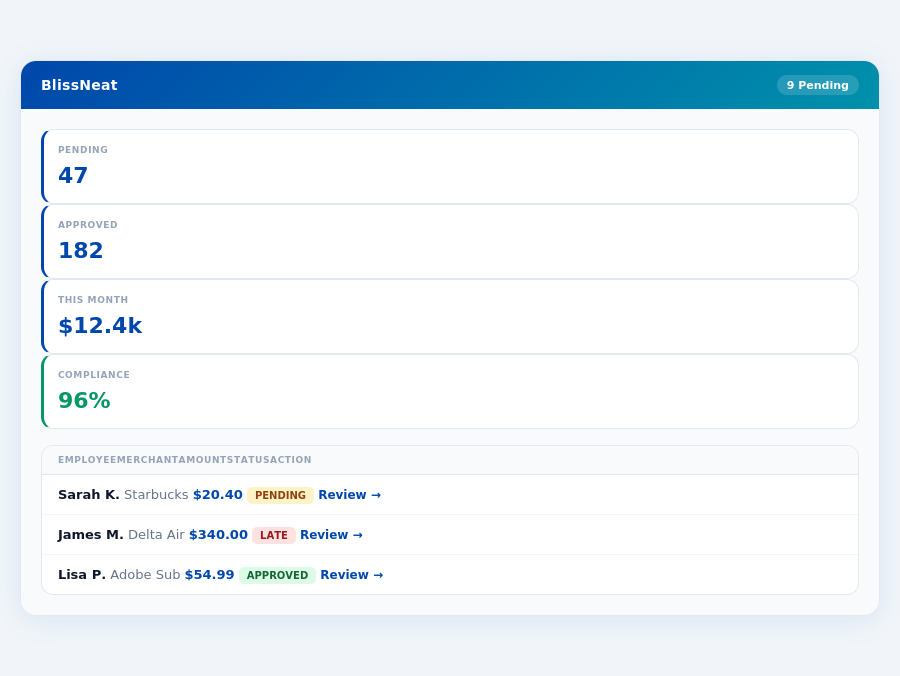
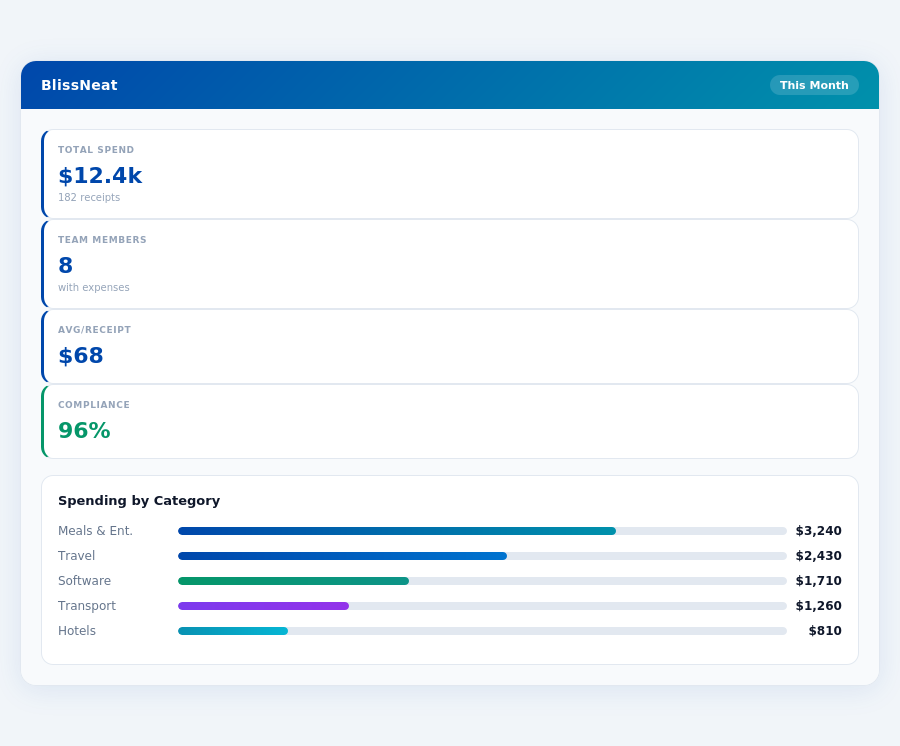
Manager-first expense management tools are designed with the needs of sales teams in mind. One of the key features of these tools is a one-click approval queue, which allows managers to quickly and easily review and approve expenses. This feature can help streamline the approval process and reduce delays in reimbursement. Another key feature is a real-time spend dashboard, which provides managers with visibility into expenses and helps them identify areas for cost savings.
Manager-first expense management tools also often include policy auto-enforcement at submission, which helps ensure compliance with company policies. This feature can help reduce non-compliant expenses and minimize financial losses. Additionally, these tools often include AI-powered receipt scanning, which can help automate the receipt collection process and reduce errors. For example, some tools can scan receipts in as little as 0.3 seconds, making it easy to collect and review receipts.
By leveraging these features, sales teams can achieve significant benefits. For example, one company achieved a 96% compliance rate with company policies, compared to an industry average of 77%. This not only reduced financial losses but also improved employee morale and productivity. Moreover, the company was able to reclaim 218 manager hours per year, which were previously spent on manual expense management tasks.
Overall, manager-first expense management tools are designed to support the unique challenges of sales teams. By providing real-time visibility, automated policy enforcement, and AI-powered features, these tools can help streamline expense management processes and achieve significant benefits. By adopting these tools, sales teams can improve their expense management processes and achieve a competitive advantage.
The ROI of Getting This Right
The return on investment (ROI) of adopting manager-first expense management tools can be significant. For example, one company saved $10,900 per year per team by automating expense management processes and reducing non-compliant expenses. This not only reduced financial losses but also improved employee morale and productivity. Moreover, the company was able to reclaim 218 manager hours per year, which were previously spent on manual expense management tasks.
Another key benefit of adopting manager-first expense management tools is improved compliance with company policies. By automating policy enforcement and providing real-time visibility, these tools can help reduce non-compliant expenses and minimize financial losses. For example, one company achieved a 96% compliance rate with company policies, compared to an industry average of 77%. This not only reduced financial losses but also improved employee morale and productivity.
Adopting manager-first expense management tools can also help reduce the time and effort required to set up and configure expense management systems. For example, some tools can be set up in as little as 15 minutes, compared to weeks or even months for traditional tools. This not only reduces the burden on IT teams but also allows sales teams to quickly and easily adopt new expense management tools.
Overall, the ROI of adopting manager-first expense management tools can be significant. By automating expense management processes, improving compliance with company policies, and reducing the time and effort required to set up and configure expense management systems, sales teams can achieve significant benefits and improve their expense management processes.
Key Features Built for Your Specific Needs
Expense management software for sales teams requires features that cater to their unique needs. One such feature is the ability to customize policies according to the team's specific requirements. This includes setting up category rules that define what expenses are allowed or disallowed, ensuring that employees adhere to the company's expense policy. For instance, a sales team may have a policy that allows for entertainment expenses, but only up to a certain limit.
Per-employee limits are another essential feature for sales teams. This feature allows managers to set individual limits for each employee, ensuring that they do not overspend on expenses. Department budgets are also crucial, as they enable managers to allocate specific budgets for different departments or teams. This feature helps prevent overspending and ensures that expenses are aligned with the company's overall budget.
Approval routing is another critical feature for sales teams. This feature enables managers to set up a workflow that requires employees to submit their expenses for approval before reimbursement. The approval routing feature ensures that expenses are reviewed and approved by the relevant authorities, reducing the risk of fraudulent or unauthorized expenses.
By having these features in place, sales teams can streamline their expense management process, reduce errors, and improve compliance with company policies. This, in turn, helps to increase employee satisfaction and productivity, as they can focus on their core responsibilities rather than worrying about expense management.
Implementation: From Zero to Running in 15 Minutes
Implementing expense management software for sales teams should be quick and easy. A self-serve setup process allows teams to get started without requiring IT support. This process typically involves creating an account, setting up the company's expense policy, and inviting team members to join the platform.
Team invitation by email is a convenient feature that enables managers to invite team members to join the platform with just a few clicks. This feature ensures that all team members are on the same page and can start using the platform immediately. The policy configuration wizard is another useful feature that guides managers through the process of setting up their expense policy.
One of the most significant advantages of expense management software for sales teams is the ability to process the first receipt on the same day. This feature ensures that employees can start submitting their expenses immediately, without having to wait for the platform to be set up. No IT support is required, which means that teams can get started without having to rely on their IT department.
Another benefit of expense management software for sales teams is the absence of migration pain. This means that teams can switch from their existing expense management system to the new platform without having to worry about losing data or disrupting their workflow. The platform is designed to be user-friendly, making it easy for teams to get started and start realizing the benefits of expense management software.
Real Results from Teams Like Yours
Expense management software for sales teams has been shown to deliver significant results. One of the most notable outcomes is the time saved by managers and employees. By automating the expense management process, teams can reduce the time spent on expense reporting and reimbursement by up to 90%. This time can be redirected to more strategic activities, such as sales and marketing.
Compliance improvement is another significant outcome of using expense management software for sales teams. By setting up clear policies and approval workflows, teams can ensure that expenses are aligned with company policies and regulatory requirements. This reduces the risk of non-compliance and helps to prevent costly fines and penalties.
Employee satisfaction is also a critical outcome of using expense management software for sales teams. By providing a user-friendly platform that makes it easy to submit expenses and receive reimbursement, teams can improve employee satisfaction and reduce frustration. This, in turn, helps to increase productivity and reduce turnover.
The compounding benefit of expense management software for sales teams is significant. Over a period of six months, teams can realize significant cost savings, improved compliance, and increased employee satisfaction. Managers can use the reclaimed time to focus on strategic activities, such as sales and marketing, which can help to drive business growth and revenue.
Getting Started With BlissNeat
Getting started with BlissNeat is easy and straightforward. The platform offers a 30-day free trial, which allows teams to try out the features and functionality without committing to a purchase. No credit card is required, making it easy for teams to get started without having to worry about unexpected charges.
Pricing for BlissNeat is competitive and based on the number of users. Teams can expect to pay between $9 and $39 per user per month, depending on the size of their team. This pricing model makes it easy for teams to scale up or down as needed, without having to worry about unexpected costs.
During the first week of using BlissNeat, teams can expect to receive comprehensive support and training. This includes access to online resources, such as tutorials and webinars, as well as dedicated customer support. The platform is designed to be user-friendly, making it easy for teams to get started and start realizing the benefits of expense management software.
BlissNeat provides a range of support resources to help teams get started and succeed with the platform. This includes online documentation, tutorials, and webinars, as well as dedicated customer support. The platform is designed to be user-friendly, making it easy for teams to get started and start realizing the benefits of expense management software.
- Expense management austin
- Expense management legal
- Expense management dallas
- Expense management san francisco
Related articles
Browse by industry
See also: Expense small nonprofits austin
See also: Expense small consulting denver
See also: Expense field consulting san francisco
See also: Expense sales manufacturing london
See also: Expense small healthcare new york
Ready to manage expenses like a pro?
30-day free trial · No credit card · Setup in 15 minutes